

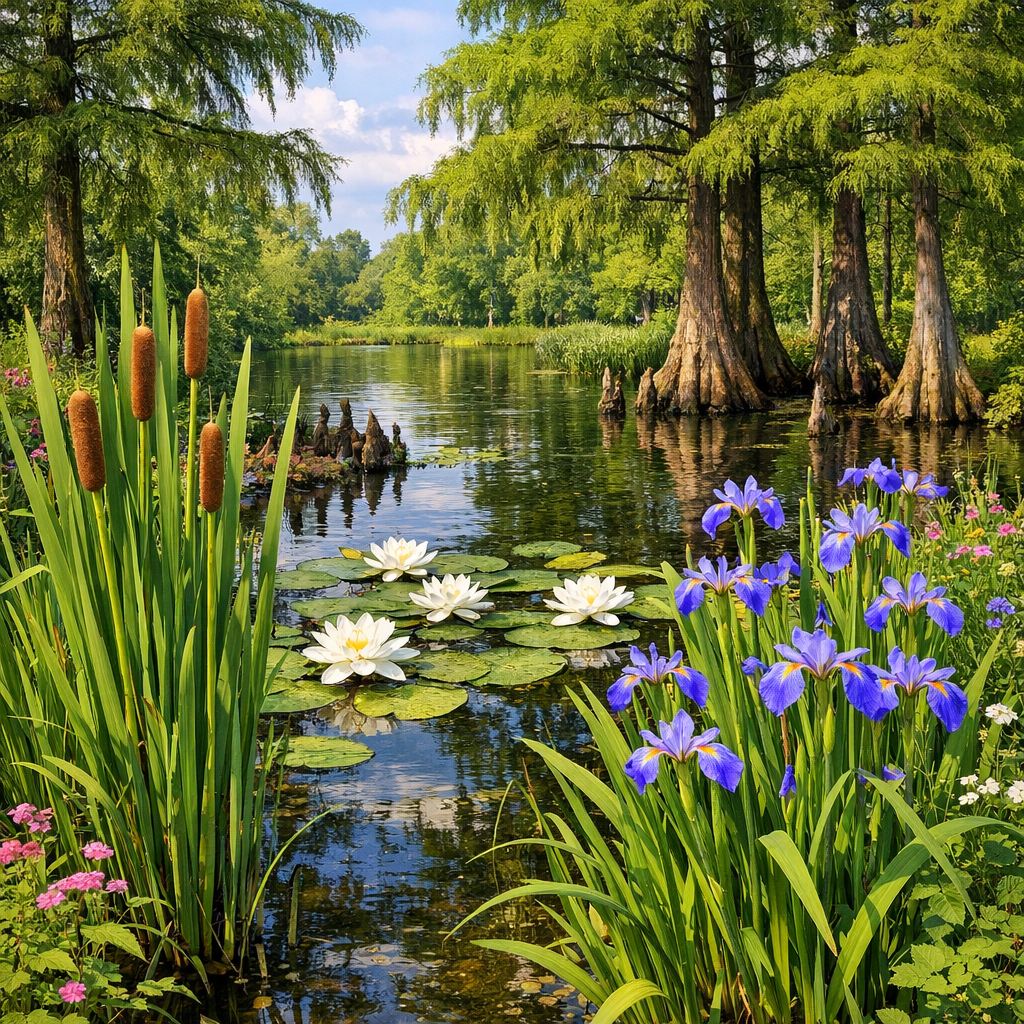
Clarksville’s unique climate and rich biodiversity make it an ideal place for gardeners to cultivate native plants. By choosing species indigenous to our region, residents can create beautiful, low-maintenance landscapes that support local wildlife and promote environmental sustainability.
Why Choose Native Plants?
Native plants are adapted to the local climate, soil, and wildlife, making them more resilient and easier to care for than non-native species. They require less water and fewer fertilizers, reducing maintenance costs and environmental impact. Additionally, native plants provide essential habitats and food sources for local pollinators, birds, and other wildlife.
Notable Native Species in Clarksville
Several native plants thrive in the Clarksville area, offering both aesthetic appeal and ecological benefits:
Cattails (Typha latifolia)
Recognizable by their distinctive brown, sausage-shaped flower spikes, cattails are commonly found in wetlands and along pond edges. They provide shelter and food for various wildlife species and were historically used by Native Americans for food and medicinal purposes. Learn more about cattails.
Blue Flag Iris (Iris virginica)
This wetland species features striking violet-blue flowers and is native to the southeastern United States. It typically grows to about two feet tall and is known for its resistance to deer and disease. Discover more about Blue Flag Iris.
White Waterlily (Nymphaea odorata)
Floating gracefully on the surface of ponds and slow-moving waters, white waterlilies have fragrant, showy flowers and broad, round leaves. They play a crucial role in aquatic ecosystems by providing habitat and food for various aquatic species. Read more about White Waterlily.
Bald Cypress (Taxodium distichum)
These deciduous conifers are known for their unique ability to thrive in both wet and dry conditions. They can grow up to 70 feet tall and are notable for their feathery foliage that turns a rich orange-brown in the fall. Bald cypress trees provide habitat for various wildlife species and are a striking addition to any landscape. Find out more about Bald Cypress.
Resources for Native Plant Enthusiasts
For those interested in incorporating native plants into their gardens, Austin Peay State University offers a Native Plant Teaching and Research Garden featuring over 300 species. This resource provides an excellent opportunity to learn about native flora and their benefits. Explore the Native Research Garden.
Additionally, local events such as the annual Native Plant Sale hosted by APSU offer residents the chance to purchase native plants and gain insights from experts. These events support the university’s public arboretum and promote the use of native species in home gardens. Learn about the APSU Native Plant Sale.
By embracing native plants, Clarksville residents can create vibrant, sustainable gardens that celebrate our region’s natural heritage and contribute to the health of local ecosystems.